


You may also like
-

Drawing in two colors Poster
Winold Reiss · 1915 · Two color dancer art print with sharp black lines and vivid red accents
Poster from €9 · Framed from €16
-

Detective Magazine Poster
Winold Reiss · 1930 · Dramatic detective poster with bold red and blue accents and noir atmosphere
Poster from €9 · Framed from €16
-

Historic Ornament Poster
Elizabeth A. Nedwill · 1900 · Vivid geometric ornament vintage print balancing historic pattern with modern rhythm
Poster from €9 · Framed from €16
-

Kleines Warm Poster
Wassily Kandinsky · 1928 · Warm abstract poster with floating circles and sharp black lines in red and yellow
Poster from €9 · Framed from €16


-

"Very nice Posters. The quality is amazing and we received it very quickly !"
-

"A shop to visit absolutely. Huge selection of posters. We spent more than an hour there !"
-

"Perfect to find gift. Price are very good. An they can frame and pack it on site"
About the Artist
Winold Reiss was a German American modernist who played a pivotal role in shaping early twentieth-century American visual culture. Renowned for his innovative use of color and geometry, Reiss moved fluidly between fine art, commercial illustration, and interior design. His work bridged European avant-garde influences and the emerging American Art Deco style, leaving a lasting mark on poster art and public spaces.
By the 1940s, Reiss was widely sought after for his ability to translate architectural and branding concepts into striking visual statements. His designs for restaurants and public venues reflected a belief that art could elevate everyday experiences, blending function with a sense of urban sophistication. This approach positioned him among the most influential figures in American decorative arts, alongside other famous artists of the era.
The Artwork
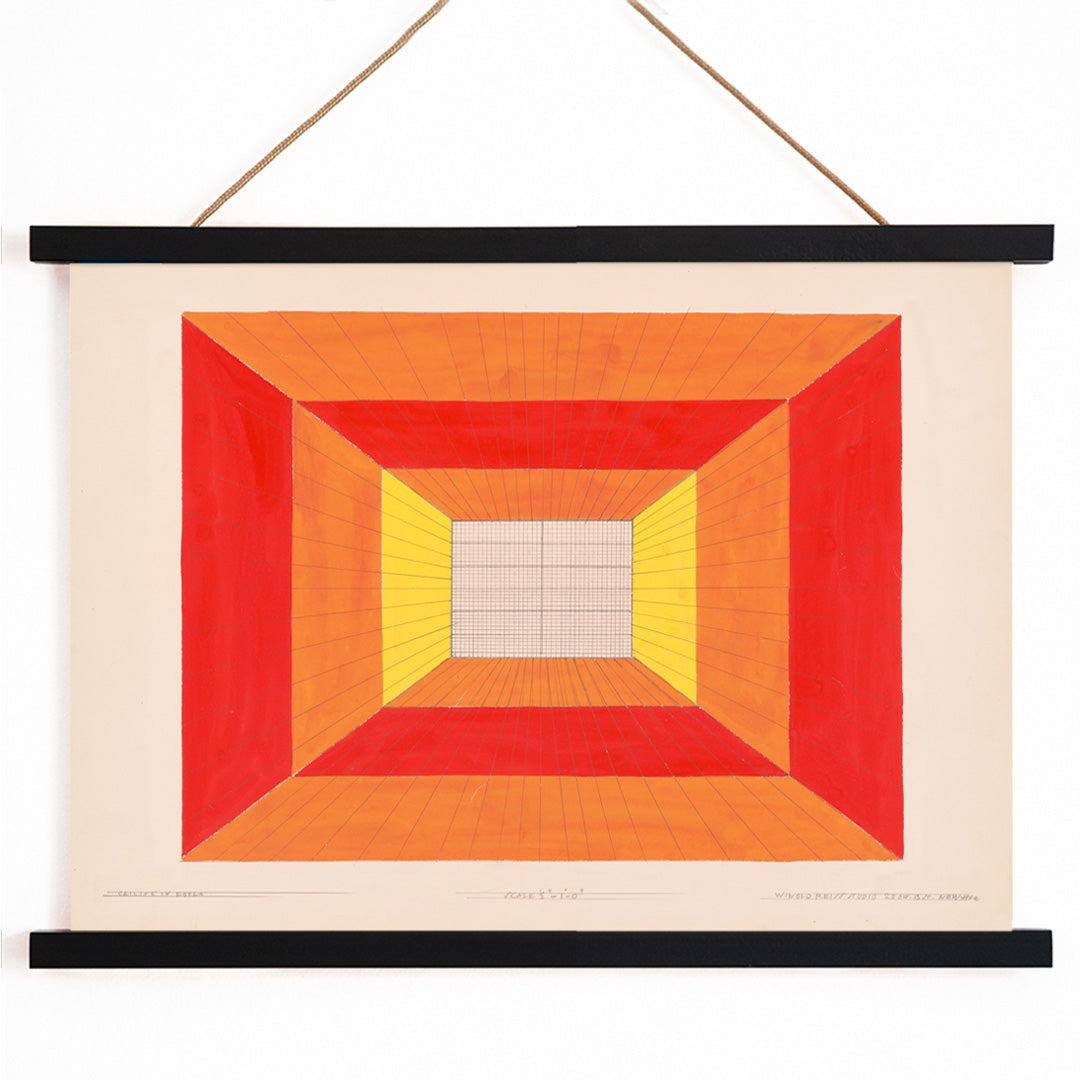
Created in 1944, this concept for Dunhall Restaurant embodies the optimism and energy of mid-century urban life. At a time when American cities were navigating the complexities of wartime and postwar society, restaurant interiors became symbols of modernity and social aspiration. Reiss’s design offered a vision of dining as both an aesthetic and communal experience, using visual identity to set the tone for the space before guests even arrived.
This artwork is not a literal depiction of a scene but a carefully constructed atmosphere—an invitation to rhythm, conversation, and contemporary taste. It stands as a testament to how commercial art and interior design converged to shape the cultural landscape of the 1940s, making it a significant piece within the tradition of vintage restaurant posters and advertising art.
Style & Characteristics
The poster features a dynamic arrangement of geometric shapes—stacked rectangles, angled planes, and circular accents—that evoke architectural signage. Dominated by flat, warm hues of red, orange, and yellow set against beige, the composition radiates energy while maintaining a sense of order. The crisp edges and bold contrasts reflect influences from Bauhaus design and classic abstract wall art, lending the piece a celebratory, urbane mood.
The overall effect is lively yet controlled, making it visually impactful from a distance. Its modernist symmetry and vibrant palette ensure it remains relevant in contemporary interiors, especially where strong graphic statements are desired.
In Interior Design
This vintage poster is particularly well suited for dining rooms, kitchens, bar areas, or creative workspaces, where its graphic vitality can echo the social spirit of its original context. It pairs harmoniously with mid-century modern furnishings, walnut woods, and chrome accents, serving as a focal point in a gallery wall or as a standalone statement piece.
For cohesive color planning, display it on warm white or beige walls and echo its palette with terracotta ceramics, mustard textiles, or a single red accent. If you are curating kitchen wall art or seeking a vintage geometric poster, this artwork brings both structure and warmth to your space.