


You may also like
-
Farbstudien, 10 Blätter X Poster
Karl Wiener · 1923 · Modernist abstract art print featuring geometric shapes in muted blue, ochre, and black
Poster from €9 · Framed from €16
Regular price From €6,00Regular price -
Farbstudien, 10 Blätter VIII Poster
Karl Wiener · 1923 · Fluid abstract art print with warm yellow washes and deep purple currents
Poster from €9 · Framed from €16
Regular price From €6,00Regular price -
Farbstudien, 10 Blätter I Poster
Karl Wiener · 1923 · Energetic abstract poster balancing orange and green forms on warm beige
Poster from €9 · Framed from €16
Regular price From €6,00Regular price -
Farbstudien, 10 Blätter IV Poster
Karl Wiener · 1923 · Luminous abstract watercolor art print with layered color fields in blue, purple, and yellow
Poster from €9 · Framed from €16
Regular price From €6,00Regular price


-

"Very nice Posters. The quality is amazing and we received it very quickly !"
-

"A shop to visit absolutely. Huge selection of posters. We spent more than an hour there !"
-

"Perfect to find gift. Price are very good. An they can frame and pack it on site"
About the Artist
Karl Wiener was an Austrian modernist who contributed to Vienna’s vibrant art scene during the interwar period. His work spanned drawing, painting, and graphic art, reflecting a time when artists were redefining the boundaries of abstraction and visual language. Wiener’s approach was shaped by the era’s intellectual climate, which encouraged experimentation and a departure from traditional representation.
He was particularly interested in how color and form could evoke emotion and structure independently of recognizable imagery. For those drawn to early twentieth-century innovation, Wiener’s legacy aligns with the pioneers of abstract art and the evolving language of modernism.
The Artwork
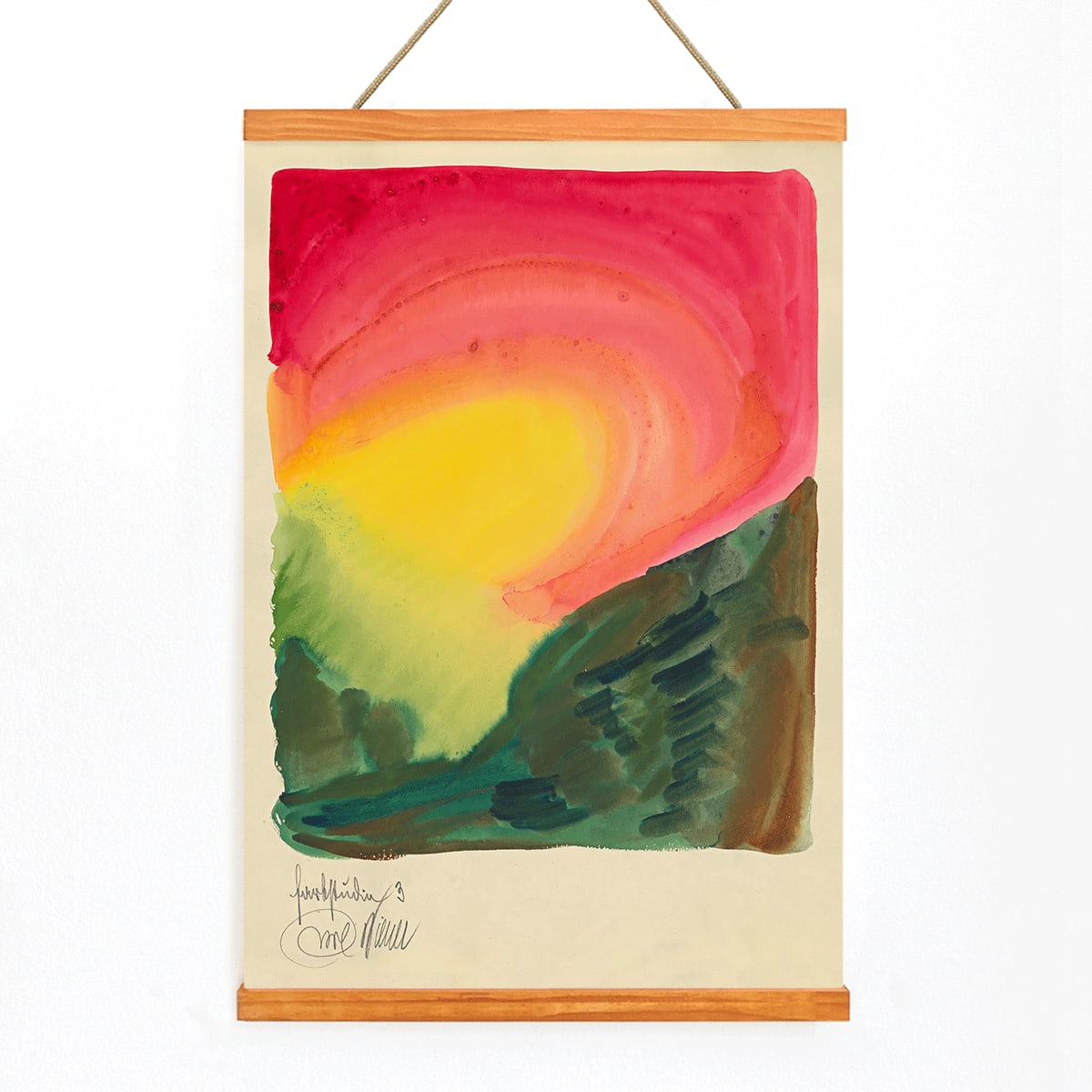
Farbstudien, 10 Blätter III emerged from a period of intense artistic inquiry, when color studies were central to developing a personal artistic vocabulary. Created in 1923, this work reflects the post-World War I search for new visual order and meaning. Artists like Wiener used such studies not just as exercises, but as a way to understand the psychological and compositional effects of color relationships, responding to the uncertainties and hopes of a rapidly changing world.
By focusing on pure color interactions, Wiener’s study embodies the spirit of experimentation that defined the modernist movement. It serves as a visual record of the artist’s process and the broader quest for clarity and harmony in a turbulent era.
Style & Characteristics
This nonfigurative composition is organized around bold, interacting fields of color. Dominant yellows and greens are juxtaposed with pink accents and earthy brown tones, creating a lively and dynamic interplay. The transitions between colors are varied—some edges are soft and blending, while others are more defined—contributing to a sense of movement and immediacy.
The overall mood is bright and inquisitive, with a modernist sensibility that feels both deliberate and experimental. The absence of strict geometry gives the piece an organic rhythm, making it a compelling example of early abstract poster design. This artwork would naturally complement other pieces in a Bauhaus-inspired or minimalist collection.
In Interior Design
This modernist art print enlivens spaces such as living rooms, offices, or creative studios, where its vibrant color fields can energize without overwhelming. It pairs beautifully with clean-lined furnishings and natural materials, bridging Scandinavian simplicity with avant-garde flair.
To harmonize with the artwork, consider accenting with yellow or green details and grounding the space with neutral tones like warm white or oak. Its abstract nature makes it versatile for gallery walls, especially within Bauhaus or minimalist arrangements, where it can serve as a focal point or a rhythmic complement to other modern pieces.