


You may also like
-

Three yellow lilies Poster
Maria de Gijselaar · 1909 · Elegant botanical print of three yellow lilies with graceful stems and warm red stamens
Poster from €9 · Framed from €16
-

Red flower Poster
Margaretha de Gijselaar · 1917 · Elegant botanical print of a red flower with crisp green foliage on beige
Poster from €9 · Framed from €16
-

Branch of Azaleas in Bloom Poster
Maria Geertruida de Gijselaar · 1875 · Delicate white azaleas botanical print with fresh green leaves and airy negative space
Poster from €9 · Framed from €16
-

Herbier Français Pl.59 Poster
Antoine Cusin · 1867 · Delicate botanical print of woodland geranium with soft pink blooms and precise linework
Poster from €9 · Framed from €16


-

"Very nice Posters. The quality is amazing and we received it very quickly !"
-

"A shop to visit absolutely. Huge selection of posters. We spent more than an hour there !"
-

"Perfect to find gift. Price are very good. An they can frame and pack it on site"
About the Artist
Maria de Gijselaar was a botanical artist active in the early nineteenth century, a time when scientific illustration flourished alongside the growing popularity of collecting and studying plants. Her meticulous approach reflects the era’s fascination with cataloguing nature and preserving the fleeting beauty of flowers for future generations.
This 1815 study of a pelargonium is now housed in the Rijksmuseum, representing the European tradition of botanical plates that bridged science and art. De Gijselaar’s work contributed to a broader movement that valued both accuracy and aesthetic refinement in natural history illustration.
The Artwork
Created during a period when botanical illustration served as both a scientific record and a symbol of cultural sophistication, this depiction of pelargonium reflects the significance of plants in nineteenth-century society. Such images allowed botanists, gardeners, and enthusiasts to document and share plant varieties at a time when global travel was limited.
In 1815, botanical prints also embodied a sense of order and appreciation for the natural world, encouraging close observation and study. This artwork exemplifies the era’s desire to elevate everyday flora into objects of enduring beauty. Discover more nature-inspired works in our botanical wall art collection.
Style & Characteristics
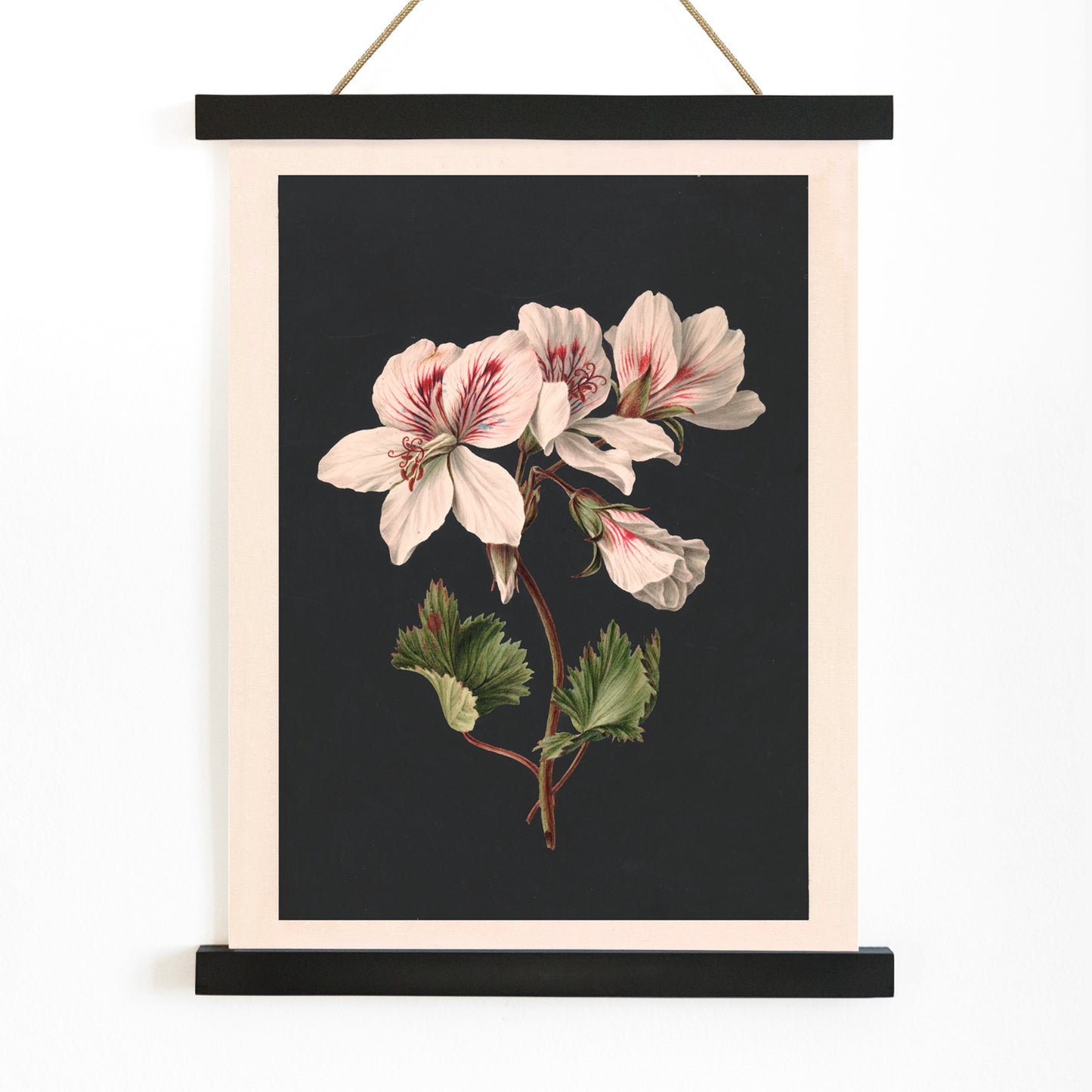
The composition features a single pelargonium plant set against a rich black background, highlighting the delicate white blossoms and the fresh green leaves. The artist’s precise linework and subtle shading emphasize the plant’s structure, from the crisp petal edges to the layered foliage.
The restrained palette—white, green, and touches of red—creates a luminous, high-contrast effect that draws the eye. The overall mood is calm and contemplative, blending vintage print aesthetics with a modern sense of clarity. For more dramatic contrasts, explore our black toned posters and green accent art prints.
In Interior Design
This pelargonium print adds a refined botanical touch to living rooms, bedrooms, or studies, especially where you want a single striking image to anchor your decor. The dark background offers sophistication on light walls and complements deeper color schemes.
It pairs well with natural wood, brass, or matte black frames, and can be integrated into gallery walls with other drawings or still lifes. Its timeless style suits both classic and modern interiors, making it a versatile choice for botanical art enthusiasts.