


You may also like
-
King Solomon Poster
Pierre-Joseph Redouté · 1805 · Graceful King Solomon's Seal botanical print with arching green leaves and white bell flowers
Poster from €9 · Framed from €16
Regular price From €6,00Regular price -
Smilacina stellata Poster
Pierre-Joseph Redouté · 1805 · Delicate botanical print of Smilacina stellata with airy white blossoms and slender leaves
Poster from €9 · Framed from €16
Regular price From €6,00Regular price -
Bush cane Poster
Pierre-Joseph Redouté · 1805 · Graceful bush cane botanical print with slender leaves and delicate pale blooms
Poster from €9 · Framed from €16
Regular price From €6,00Regular price -
Twistedstalk Poster
Pierre-Joseph Redouté · 1805 · Delicate twistedstalk botanical print with arching green leaves and small white blossoms
Poster from €9 · Framed from €16
Regular price From €6,00Regular price


-

"Very nice Posters. The quality is amazing and we received it very quickly !"
-

"A shop to visit absolutely. Huge selection of posters. We spent more than an hour there !"
-

"Perfect to find gift. Price are very good. An they can frame and pack it on site"
About the Artist
Pierre-Joseph Redouté, born in 1759 in the Southern Netherlands and active in Paris, became the most celebrated botanical illustrator of his era. Bridging the worlds of art and science, he created works that appealed to both botanists and art collectors, earning the favor of French royalty and leading figures during the late Enlightenment and Napoleonic periods.
His illustrations for Les Liliacees set a high standard for botanical art, blending scientific accuracy with refined aesthetic sensibility. Redouté’s legacy endures in the canon of famous artists and continues to inspire those who appreciate classic art and natural history.
The Artwork
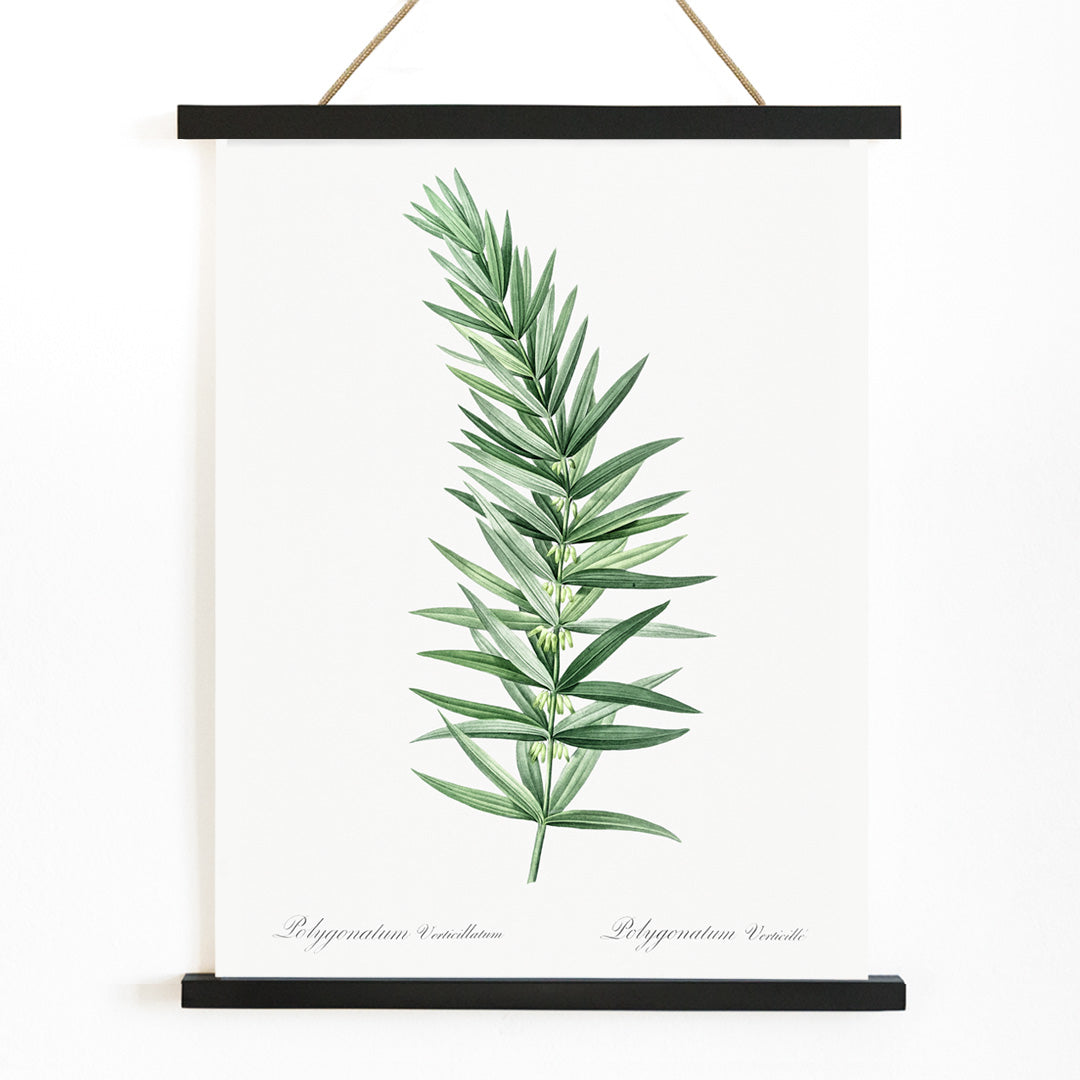
Created in 1805, this depiction of whorled Solomon seal reflects a time when botanical illustration was essential for documenting and sharing plant knowledge. Such works served as vital references for botanists and gardeners, allowing for detailed study of plant forms beyond the confines of the garden or wild.
The Solomon seal, prized for its elegant structure and subtle beauty, was a fitting subject for Redouté’s meticulous approach. This plate embodies the spirit of early nineteenth-century scientific curiosity, where observation and artistic expression worked hand in hand to advance understanding of the natural world.
Style & Characteristics
The artwork features a single, slender stem rising vertically against a pale background, with neatly arranged whorls of narrow green leaves and small, delicate white blossoms hanging below. The composition is airy and uncluttered, emphasizing the plant’s graceful form and botanical detail.
Soft greens and gentle floral tones create a serene, fresh mood, while precise linework and subtle shading highlight both the scientific and decorative qualities of the illustration. This style is characteristic of Redouté’s botanical prints and fits seamlessly into botanical or green toned art collections.
In Interior Design
This botanical print brings a quiet, natural elegance to bedrooms, hallways, kitchens, or studies, especially where a touch of nature is desired without overwhelming the space. Its vertical orientation suits narrow walls or can be grouped with other vintage prints for a gallery effect.
Pairing the print with soft linens, sage ceramics, or natural wood tones enhances its calming presence. It complements Scandinavian, cottage, and classic interiors, and works beautifully alongside other botanical or green toned prints for a harmonious, nature-inspired atmosphere.