


You may also like
-
Three yellow lilies Poster
Maria de Gijselaar · 1909 · Elegant botanical print of three yellow lilies with graceful stems and warm red stamens
Poster from €9 · Framed from €16
Regular price From €6,00Regular price -
Gorteria diffusa Poster
Robert Jacob Gordon · 1779 · Vivid daisy-like botanical print featuring orange-red blooms and crisp green foliage
Poster from €9 · Framed from €16
Regular price From €6,00Regular price -
Red flower Poster
Margaretha de Gijselaar · 1917 · Elegant botanical print of a red flower with crisp green foliage on beige
Poster from €9 · Framed from €16
Regular price From €6,00Regular price -
Lily Poster
Friedrich Leopold Hoffmann · 1895 · Graceful lily botanical print with crisp linework and deep green leaves
Poster from €9 · Framed from €16
Regular price From €6,00Regular price


-

"Very nice Posters. The quality is amazing and we received it very quickly !"
-

"A shop to visit absolutely. Huge selection of posters. We spent more than an hour there !"
-

"Perfect to find gift. Price are very good. An they can frame and pack it on site"
About the Artist
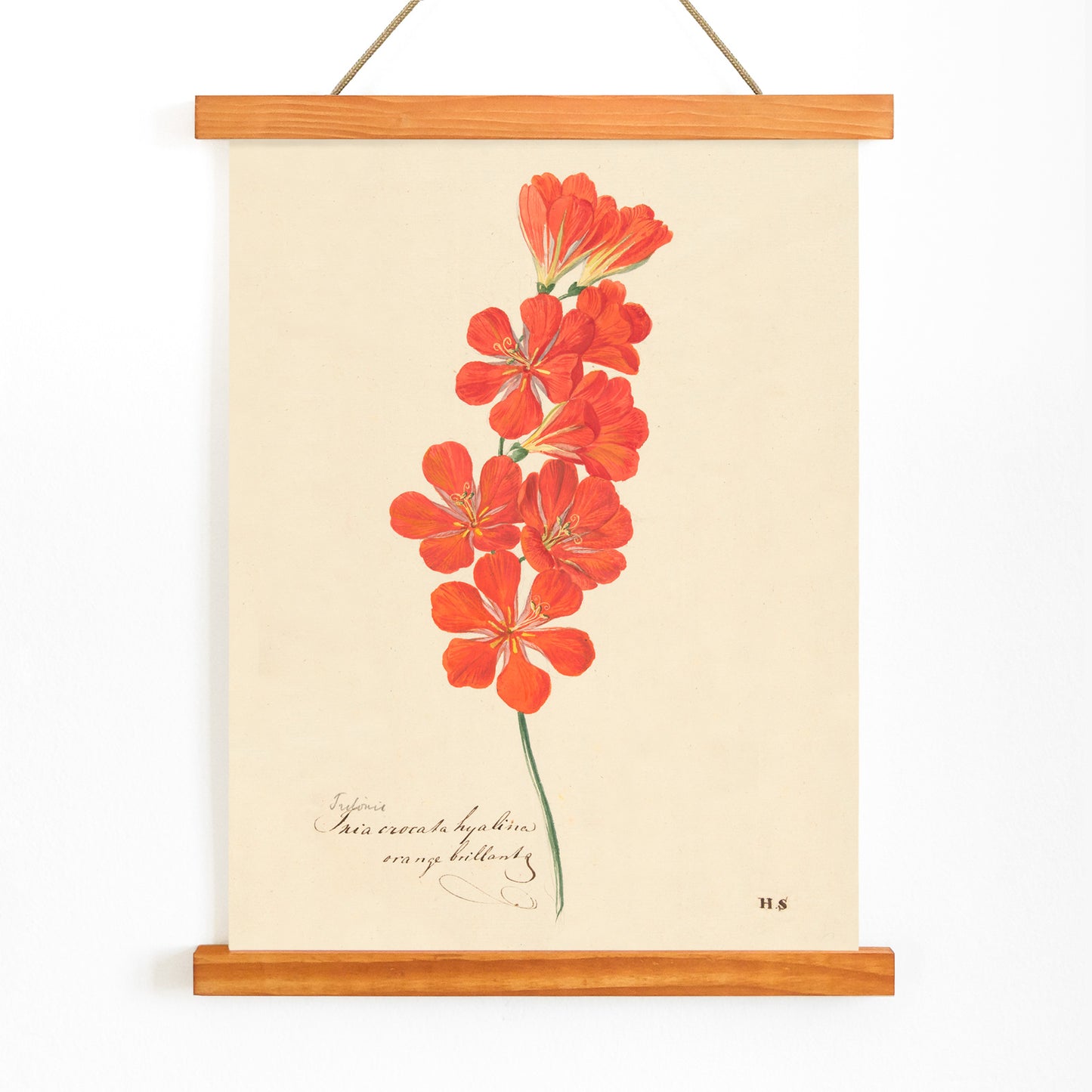
Hendrik Cornelis Schwegman was a botanical illustrator whose work reflects the late 19th-century passion for collecting, naming, and cultivating exotic plants. At a time when illustrated reference books and botanical gardens were shaping both scientific understanding and public taste, artists like Schwegman played a vital role in documenting and celebrating plant diversity for a wider audience.
This fine art print finds its place among other botanical works, where careful observation meets decorative refinement.
The Artwork
Tritonia crocata, also known as flame freesia, became popular in European horticulture through the era’s expanding plant exchanges and botanical exploration. By 1892, accurate illustrations were indispensable for gardeners and botanists, serving as reliable guides for identification and cultivation, and preserving records of prized species as they moved between collections and publications.
This vintage print exemplifies the tradition of botanical documentation that merges scientific clarity with artistic sensibility, transforming a single species into a portrait of both nature and human curiosity. It reflects the era’s desire to bring the wonders of the natural world into everyday life through art.
Style & Characteristics
The composition displays the Tritonia crocata in a precise specimen study, with arching stems, slender green leaves, and vibrant red-orange blossoms arranged for clarity and elegance. The artist’s attention to clean outlines and subtle shading highlights both botanical accuracy and a gentle sense of vitality.
The warm hues of the flowers contrast with the light beige background, while the fresh greens provide balance and structure. The overall mood is bright and composed, making it suitable for interiors that incorporate red accents or natural, plant-inspired themes.
In Interior Design
This botanical print is well-suited for kitchens, dining rooms, entryways, or home offices where a touch of uplifting color and calm is desired. It complements vintage-inspired decor as well as Scandinavian, modern classic, or cottage interiors.
Pair it with light wood furnishings, linen textiles, and ceramics in neutral tones, and echo the green leaves with subtle green accessories. Framed simply, it evokes the charm of a curated herbarium sheet in contemporary home settings.