


You may also like
-
Astrocaryum Murumuru Poster
Carl Friedrich Philipp von Martius · 1823 · Detailed palm botanical print with spiny trunk and fruit studies on beige
Poster from €9 · Framed from €16
Regular price From €6,00Regular price -
Euterpe Oleracea Poster
Carl Friedrich Philipp von Martius · 1823 · Detailed palm print showing fronds, fruit clusters, and botanical study diagrams on beige
Poster from €9 · Framed from €16
Regular price From €6,00Regular price -
Attalea Compta Poster
Carl Friedrich Philipp von Martius · 1823 · Detailed botanical print of Attalea palm with coastal scene and botanical studies
Poster from €9 · Framed from €16
Regular price From €6,00Regular price -
Cocos Schizophylla Poster
Carl Friedrich Philipp von Martius · 1823 · Detailed botanical print of a palm specimen with fronds and fruit
Poster from €9 · Framed from €16
Regular price From €6,00Regular price


-

"Very nice Posters. The quality is amazing and we received it very quickly !"
-

"A shop to visit absolutely. Huge selection of posters. We spent more than an hour there !"
-

"Perfect to find gift. Price are very good. An they can frame and pack it on site"
About the Artist
Carl Friedrich Philipp von Martius was a German botanist and explorer whose pioneering work in the early nineteenth century shaped the field of tropical botany. His extensive travels through Brazil resulted in a vast collection of plant specimens and detailed observations, which became foundational for European understanding of South American flora.
Martius’s dedication to scientific accuracy and artistic quality culminated in the monumental Historia Naturalis Palmarum, a reference work that set new standards for botanical illustration. His legacy endures among collectors of botanical and science prints, where his blend of research and artistry remains highly regarded.
The Artwork
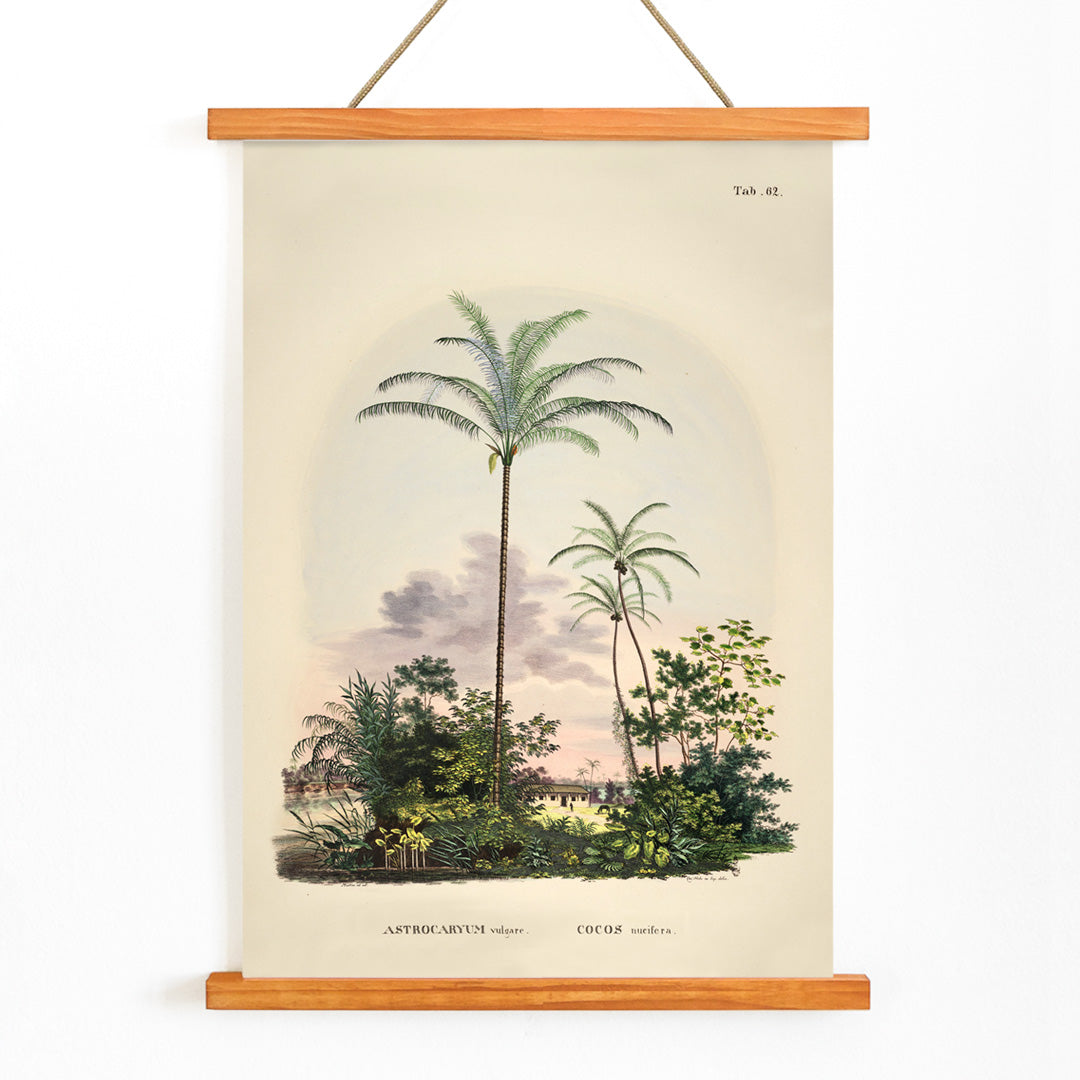
This 1823 illustration of Astrocaryum vulgare was created at a time when European botanists sought to document and classify the world’s tropical plants. Such plates were essential for sharing discoveries with scholars and institutions far from the field, serving as both scientific records and educational tools.
The palm depicted here was of particular interest due to its economic uses and complex structure. By capturing its unique features, Martius contributed to a broader understanding of tropical biodiversity and the importance of palms in both ecological and cultural contexts.
Style & Characteristics
The artwork features a tall, slender palm rendered with meticulous linework, accompanied by smaller botanical details that highlight the plant’s fruit and structural elements. The composition is balanced and clear, reflecting the conventions of nineteenth-century scientific illustration.
Naturalistic greens and browns stand out against a warm beige background, lending the print a calm and archival presence. The mood is contemplative and precise, making this botanical print both visually appealing and informative—a classic example of vintage natural history art.
In Interior Design
This vintage botanical print enhances interiors with its refined, scholarly character. It pairs well with light woods, rattan, and linen, and is especially suited for home offices, reading nooks, or gallery walls where vertical format is desired.
To complement its palette, consider surrounding it with sage, olive, or sand tones, or let it provide a gentle accent on crisp white walls. The print looks particularly polished in gallery-style frames of oak or walnut, fitting seamlessly into both modern and classic decor schemes.