


You may also like
-
Flowers Poster 1 Poster
Karl Blossfeldt · 1928 · Sculptural flower print in crisp black and white with laboratory clarity
Poster from €9 · Framed from €16
Regular price From €6,00Regular price -
Acanthus mollis Poster
Karl Blossfeldt · 1928 · Sculptural acanthus print with sharp monochrome detail and museum like calm
Poster from €9 · Framed from €16
Regular price From €6,00Regular price -
Phacelia tanacetifolia Poster
Karl Blossfeldt · 1928 · Sculptural Phacelia study art print with crisp monochrome detail and rhythmic curves
Poster from €9 · Framed from €16
Regular price From €6,00Regular price -
Cobea scandens Poster
Karl Blossfeldt · 1928 · Sculptural Mexican ivy print with crisp monochrome stems and curling tendrils
Poster from €9 · Framed from €16
Regular price From €6,00Regular price


-

"Very nice Posters. The quality is amazing and we received it very quickly !"
-

"A shop to visit absolutely. Huge selection of posters. We spent more than an hour there !"
-

"Perfect to find gift. Price are very good. An they can frame and pack it on site"
About the Artist
Karl Blossfeldt was a German photographer renowned for his pioneering plant portraits, which transformed the way nature was viewed in the early 20th century. His background in teaching and design influenced his approach, as he used photography to reveal the underlying structures and patterns in botanical forms.
Blossfeldt’s work emerged during a time when the boundaries between art, science, and craft were being redefined. His images, first published in 1928, became icons of the New Objectivity movement and continue to inspire those interested in photography wall art and the history of modern design.
The Artwork
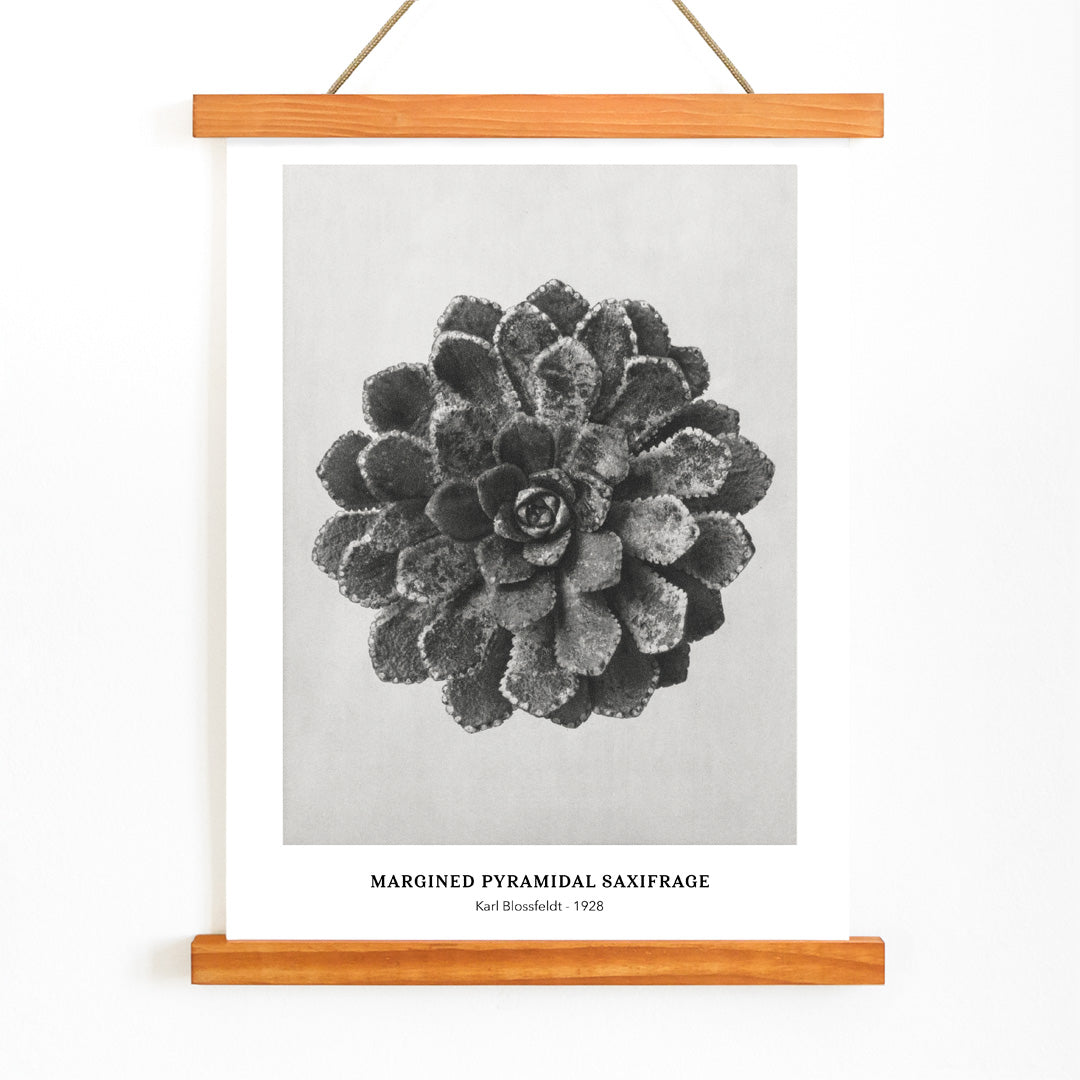
Margined Pyramidal Saxifrage is part of Blossfeldt’s larger vision to present plants as sources of inspiration for artists and architects. Created in an era when modernism celebrated clarity and structure, this photograph reflects a belief that nature’s forms could guide new artistic and architectural ideas.
By focusing on the saxifrage, Blossfeldt invites viewers to see botanical specimens not just as scientific objects but as models of natural order and design. The image also echoes the educational aims of the period, bridging botanical study and visual instruction. For those exploring botanical wall art, it offers a glimpse into the intellectual climate of 1920s Germany.
Style & Characteristics
This black-and-white botanical photograph is composed with striking clarity, isolating the saxifrage against a deep, almost velvety background. The tonal range spans from rich blacks to luminous greys, highlighting the plant’s crisp edges and layered forms.
Blossfeldt’s sharp focus and tight framing lend the image a sculptural, architectural quality, transforming the plant into a monument of natural design. The overall mood is calm and analytical, making it an ideal addition to minimalist or Bauhaus-inspired decor schemes.
In Interior Design
This fine art print brings a sense of order and quiet sophistication to living rooms, studies, or entryways. Its monochrome palette integrates seamlessly with white, grey, or black interiors, and it pairs beautifully with other botanical wall art for a cohesive, curated look.
Whether used to balance vibrant color schemes or to enhance a serene, neutral space, the print appeals to design enthusiasts and plant lovers alike, offering a timeless connection between nature and modern aesthetics.