


You may also like
-
Japanese woman 3 Poster
Utagawa Hiroshige · 1935 · Serene ukiyo-e style poster of a kimonoed woman holding a fan in blue and red
Poster from €9 · Framed from €16
Regular price From €6,00Regular price -
Eight shadow figures Poster
Utagawa Hiroshige · 1842 · Playful ukiyo-e poster of hand shadows and paper screens
Poster from €9 · Framed from €16
Regular price From €6,00Regular price -
Saitō no Oniwakamaru Poster
Tsukioka Yoshitoshi · 1872 · Dramatic ukiyo-e poster of a warrior battling a giant carp amid crashing waves
Poster from €9 · Framed from €16
Regular price From €6,00Regular price -
Tōkaidō kanaya no fuji Poster
Katsushika Hokusai · 1833 · Dynamic Mount Fuji poster showing travelers crossing a wide river under sweeping skies
Poster from €9 · Framed from €16
Regular price From €6,00Regular price


-

"Very nice Posters. The quality is amazing and we received it very quickly !"
-

"A shop to visit absolutely. Huge selection of posters. We spent more than an hour there !"
-

"Perfect to find gift. Price are very good. An they can frame and pack it on site"
About the Artist
Utagawa Hiroshige, born in 1797, stands among the most influential figures of ukiyo-e, the Japanese woodblock print tradition. Renowned for his evocative landscapes, Hiroshige captured the spirit of Edo-period Japan, offering viewers poetic glimpses into everyday life and celebrated sites. His works have inspired generations of artists and collectors, both in Japan and abroad.
Today, Hiroshige’s prints are highly regarded in collections of famous artists wall art and are especially admired by those who appreciate the refined storytelling of oriental art. His legacy endures as a bridge between historical Japanese aesthetics and modern appreciation.
The Artwork
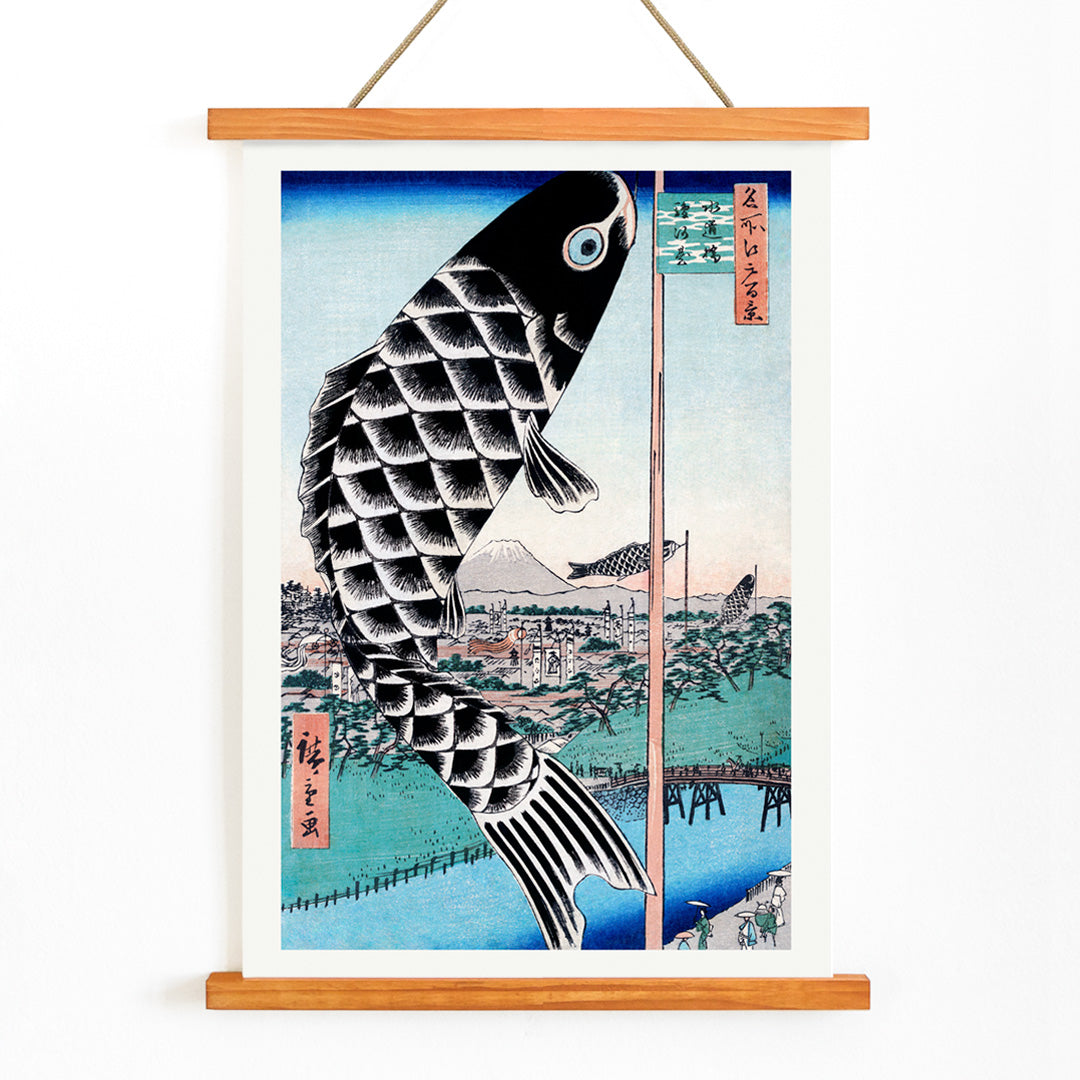
Created in 1857 during the final years of Hiroshige’s career, Suidobashi Bridge and Surugadai reflects a period when woodblock prints served as both souvenirs and visual records of Edo’s changing cityscape. The composition celebrates a familiar urban intersection, marked by the presence of a carp windsock—traditionally flown during festivals as a symbol of hope and perseverance.
This print is part of a celebrated series depicting famous places in Edo, offering viewers a sense of place and season. It preserves the atmosphere of daily life in the city, inviting contemplation of both tradition and the gentle rhythms of urban nature in nineteenth-century Japan.
Style & Characteristics
The composition draws the viewer’s gaze upward, with the carp windsock set boldly against a luminous sky. Below, the bridge and tranquil waterway form a horizontal anchor, balancing the vertical ascent. Hiroshige employs cool blues and greens, punctuated by crisp black outlines and soft gradients characteristic of Japanese woodblock technique.
The overall mood is serene and celebratory, with light-filled spaces and subtle transitions lending the scene a sense of clarity and calm. The print’s harmonious palette and clean structure make it a quintessential example of blue and green Japanese wall art from the Edo period.
In Interior Design
This vintage print lends a tranquil, architectural presence to living rooms, studies, or entryways, especially in interiors that favor minimalist or Japandi influences. Its balance of open sky and graphic detail pairs well with neutral palettes and natural materials.
For a cohesive look, combine it with blue tone prints and landscape posters. Framing in slim black or natural wood enhances its timeless, contemplative quality, making it a versatile addition to curated gallery walls.