


You may also like
-
Nami–chi–dori Poster
Kazumasa Ogawa · 1896 · Elegant wave and plover poster with airy negative space and gentle coastal rhythm
Poster from €9 · Framed from €16
Regular price From €6,00Regular price -
Lily Poster
Kazumasa Ogawa · 1896 · Delicate lily botanical print with hand-tinted petals and soft neutral background
Poster from €9 · Framed from €16
Regular price From €6,00Regular price -
Group of Azaleas Poster
Kazumasa Ogawa · 1896 · Delicate botanical print of clustered azaleas with soft pink blossoms and fresh green leaves
Poster from €9 · Framed from €16
Regular price From €6,00Regular price -
Lilies Poster
Kazumasa Ogawa · 1896 · Hand-colored lily vintage print with luminous whites and gentle pastel greens
Poster from €9 · Framed from €16
Regular price From €6,00Regular price


-

"Very nice Posters. The quality is amazing and we received it very quickly !"
-

"A shop to visit absolutely. Huge selection of posters. We spent more than an hour there !"
-

"Perfect to find gift. Price are very good. An they can frame and pack it on site"
About the Artist
Kazumasa Ogawa was a pioneering Japanese photographer and publisher active during the Meiji period, a time of rapid modernization in Japan. Renowned for his mastery of the collotype process, Ogawa elevated photographic printing to an art form, capturing subtle tonal transitions and exquisite detail. His work bridged the gap between documentation and artistry, influencing the development of Japanese photographic aesthetics.
Ogawa's dedication to both technical excellence and visual poetry made his botanical images highly sought after by collectors and scholars alike. His legacy endures in the way he brought together traditional Japanese sensibilities with new photographic technologies.
The Artwork
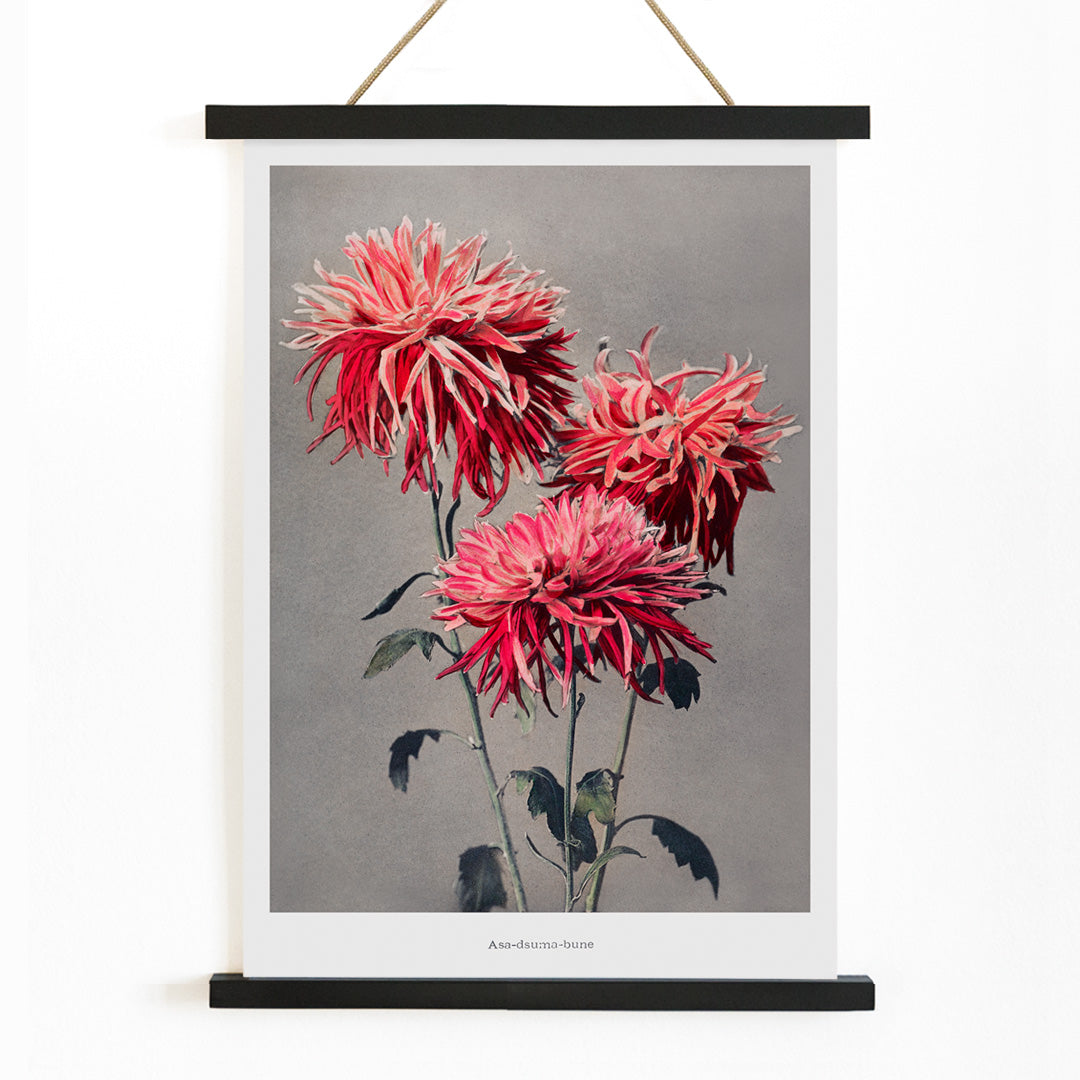
This floral study, Asa–dsuma–bune, was created during a period when botanical imagery held deep cultural resonance in Japan. In the late 19th century, as industrialization transformed daily life, artists and publishers turned to nature as a subject of reflection and continuity. Botanical prints like this one were valued not only for their scientific accuracy but also for their ability to evoke the changing seasons and the beauty of everyday life.
Serving both as a record and as a cherished keepsake, this image reflects the Meiji era's fascination with cataloging and appreciating the natural world. It embodies the spirit of collecting and the quiet appreciation of refined, fleeting beauty.
Style & Characteristics
The composition centers a vivid red blossom with crisp green leaves against a soft, neutral background. Ogawa's hand-colored technique enhances the lifelike quality of the flower, while the restrained setting ensures the plant remains the focal point. Fine photographic detail reveals the delicate structure of each petal and leaf.
The gentle tonal transitions and subtle contrasts create a calm, contemplative mood, making the print ideal for serene spaces. For those interested in similar works, explore our photographic prints and botanical collections.
In Interior Design
This vintage botanical print complements minimalist, Japandi, and classic interiors, where its simplicity and elegance shine. It is especially suited for bedrooms or entryways, offering a tranquil focal point that brings a touch of nature indoors.
Pair the print with natural materials such as wood or linen to enhance its organic feel. A slim frame and generous matting will highlight the negative space, while options in our frames collection can help you achieve a refined, gallery-style presentation.