


You may also like
-
Discomedusae Poster
Ernst Haeckel · 1904 · Radiant jellyfish scientific print with translucent bells and flowing tentacles
Poster from €9 · Framed from €16
Regular price From €6,00Regular price -
Peromedusae Poster
Ernst Haeckel · 1904 · Intricate jellyfish scientific print with floating bells and lace-like tentacles
Poster from €9 · Framed from €16
Regular price From €6,00Regular price -
Ctenophorae Poster
Ernst Haeckel · 1904 · Ethereal comb jellies scientific print with delicate blue translucence and precise zoological detail
Poster from €9 · Framed from €16
Regular price From €6,00Regular price -
Discomedusae Poster
Ernst Haeckel · 1904 · Detailed jellyfish scientific print with floating bells and lace-like tentacles
Poster from €9 · Framed from €16
Regular price From €6,00Regular price


-

"Very nice Posters. The quality is amazing and we received it very quickly !"
-

"A shop to visit absolutely. Huge selection of posters. We spent more than an hour there !"
-

"Perfect to find gift. Price are very good. An they can frame and pack it on site"
About the Artist
Ernst Haeckel was a German zoologist, philosopher, and influential scientific illustrator whose work transformed the way nineteenth-century audiences understood marine biology. His background in research and his artistic sensibility allowed him to bridge science and art, making the complexities of nature accessible and visually compelling.
Haeckel’s illustrations were created during a period of rapid scientific discovery, when advances in microscopy and ocean exploration revealed new life forms. His legacy endures in both the scientific and artistic communities, and his prints are prized by collectors of famous artists wall art for their historical and aesthetic significance.
The Artwork
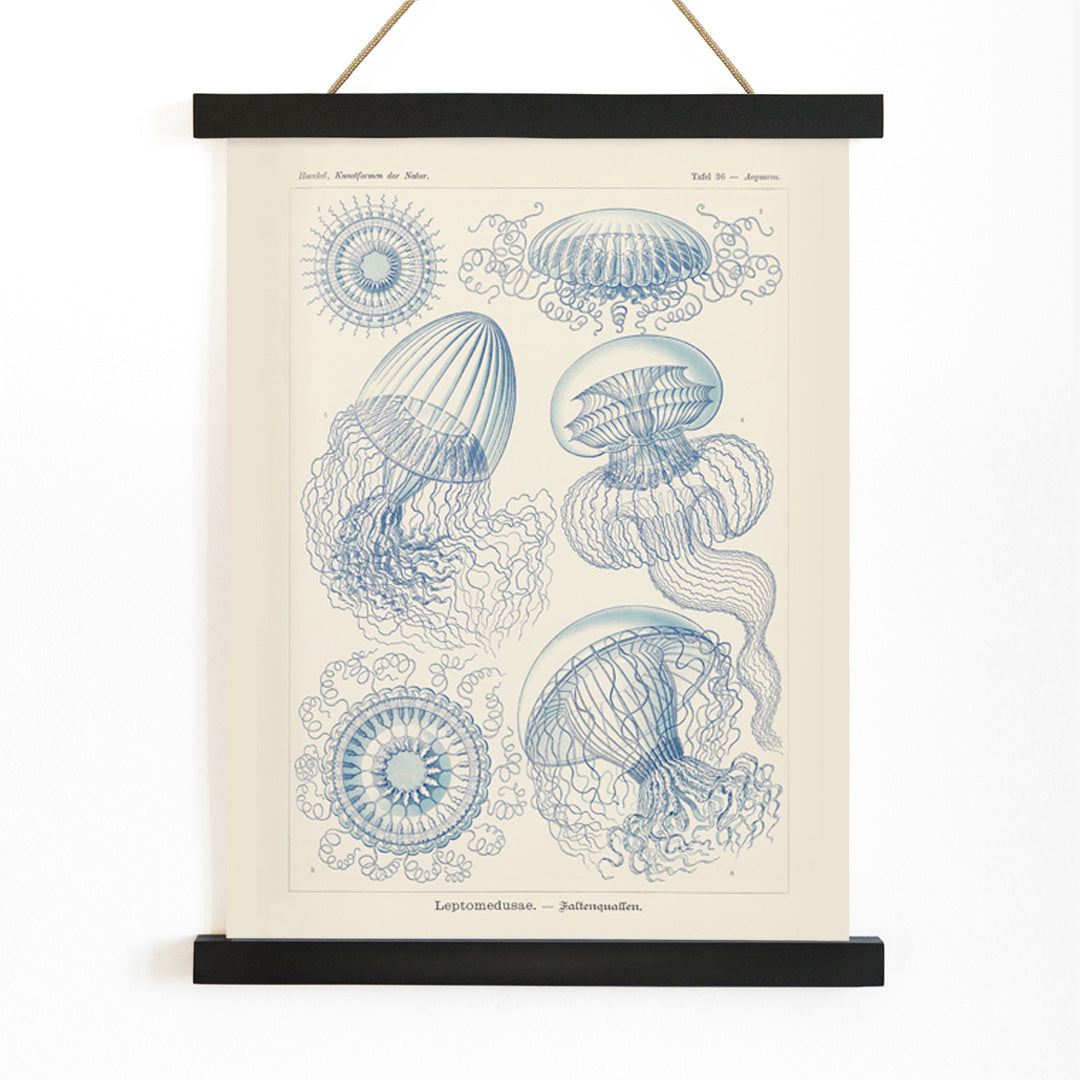
This plate, Leptomedusae, was produced as part of Haeckel’s effort to document and classify the diversity of jellyfish species. Created during a time when marine expeditions were uncovering new organisms, the print served as a scientific reference, helping researchers compare and identify delicate marine creatures that were otherwise difficult to study.
Haeckel’s intention was not only to record the forms of these medusae, but also to reveal the underlying order and beauty of nature’s designs. The artwork reflects the era’s optimism about science’s ability to uncover and organize the mysteries of the natural world.
Style & Characteristics
The composition is structured like a scientific chart, featuring multiple jellyfish species arranged symmetrically for comparison. Each medusa is rendered with precise linework and subtle shading, highlighting their translucent bells, radiating tentacles, and intricate internal anatomy.
The restrained blue-and-white palette creates a luminous, serene atmosphere, emphasizing the ethereal quality of the jellyfish. The print’s clarity and delicacy exemplify the tradition of nineteenth-century scientific illustration, making it a striking example of science posters and prints.
In Interior Design
This jellyfish scientific print brings a sense of calm and curiosity to interiors, making it ideal for living rooms, studies, or creative workspaces. Its clean lines and cool tones pair well with modern, minimalist, or Scandinavian decor, as well as vintage-inspired settings.
Displayed alongside white or navy walls, light wood, or metallic accents, it can anchor a coastal-themed arrangement or complement a collection of sea and ocean wall art, offering a refined nod to the wonders of marine life.