


You may also like
-
The Queen–Plant Poster
Philip Reinagle · 1807 · Romantic botanical print featuring a vivid red Queen-Plant bloom set in a sweeping landscape
Poster from €9 · Framed from €16
Regular price From €6,00Regular price -
Superb Lily Poster
Philip Reinagle · 1807 · Dramatic lily botanical print with luminous petals and fine botanical detail
Poster from €9 · Framed from €16
Regular price From €6,00Regular price -
The Oblique–Leaved Begonia Poster
Philip Reinagle · 1807 · Elegant botanical print of an oblique-leaved begonia with soft pink and green hues
Poster from €9 · Framed from €16
Regular price From €6,00Regular price -
The Chinese Limodoron Poster
Philip Reinagle · 1807 · Elegant Chinese Limodoron botanical print with slender green stems and delicate orchid blossoms
Poster from €9 · Framed from €16
Regular price From €6,00Regular price


-

"Very nice Posters. The quality is amazing and we received it very quickly !"
-

"A shop to visit absolutely. Huge selection of posters. We spent more than an hour there !"
-

"Perfect to find gift. Price are very good. An they can frame and pack it on site"
About the Artist
Philip Reinagle was an English painter and illustrator active at the turn of the 19th century, renowned for his ability to blend scientific accuracy with artistic elegance. His work emerged during a period when botanical illustration was highly valued by both scientists and collectors, reflecting the Enlightenment's fascination with cataloguing the natural world. Reinagle contributed to major projects that aimed to make botanical knowledge accessible and visually captivating for a wider audience.
His illustrations were often featured in prestigious publications that sought to elevate the status of botanical art, transforming plant studies into objects of beauty as well as scientific interest. This approach helped shape the appreciation of botanical prints as both educational tools and decorative pieces in Georgian Britain.
The Artwork
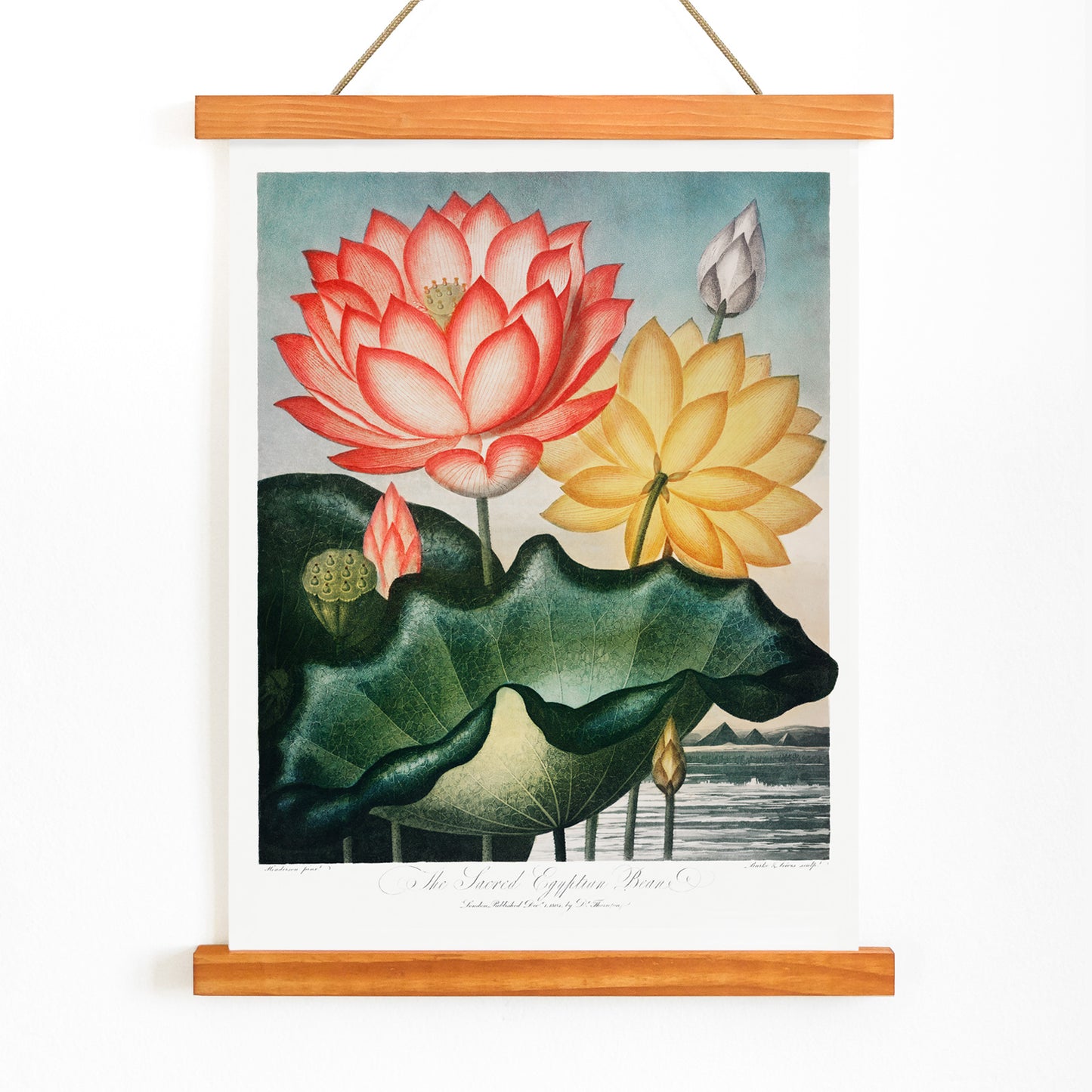
This plate of the Sacred Egyptian Bean was created at a time when botanical illustration played a vital role in documenting and celebrating the diversity of global flora. The artwork is closely linked to the era’s grand botanical folios, such as Thornton’s Temple of Flora, which presented rare and culturally significant plants to an audience eager for knowledge and aesthetic pleasure.
The lotus, depicted here, was revered in ancient cultures for its symbolism of purity and renewal. By featuring this plant, the print not only served scientific purposes but also evoked the mystique and beauty of distant lands, aligning with the period’s spirit of exploration and discovery.
Style & Characteristics
The composition features a prominent lotus flower emerging above water, accompanied by a seedpod and broad, rounded leaves that float on the surface. The artist employs precise linework and subtle shading to give the plant a lifelike, sculptural quality, while the uncluttered background draws attention to the subject.
The flower displays soft pinks and creamy whites, contrasted by lush green leaves and touches of blue in the water, creating a tranquil and harmonious palette. The overall effect is both serene and striking, making this botanical print a refined addition to any space.
In Interior Design
This botanical print introduces a sense of calm sophistication to living rooms, bedrooms, or studies, especially when used as a focal point. Its gentle colors and elegant composition pair well with natural wood frames, brass accents, and neutral textiles, fitting seamlessly into both classic and modern interiors.
For a curated look, display it alongside other botanical wall art or integrate it into a gallery of classic art prints. The green tones also coordinate beautifully with green toned posters, enhancing a cohesive and inviting atmosphere.