


You may also like
-
Corypha Cerifera Arruda Poster
Carl Friedrich Philipp von Martius · 1823 · Detailed palm botanical print with fan leaves and precise scientific inset studies
Poster from €9 · Framed from €16
Regular price From €6,00Regular price -
Attalea Compta 2 Poster
Carl Friedrich Philipp von Martius · 1823 · Detailed palm botanical print with scientific studies on warm beige paper
Poster from €9 · Framed from €16
Regular price From €6,00Regular price -
Euterpe Oleracea Poster
Carl Friedrich Philipp von Martius · 1823 · Detailed palm print showing fronds, fruit clusters, and botanical study diagrams on beige
Poster from €9 · Framed from €16
Regular price From €6,00Regular price -
Attalea Compta Poster
Carl Friedrich Philipp von Martius · 1823 · Detailed botanical print of Attalea palm with coastal scene and botanical studies
Poster from €9 · Framed from €16
Regular price From €6,00Regular price


-

"Very nice Posters. The quality is amazing and we received it very quickly !"
-

"A shop to visit absolutely. Huge selection of posters. We spent more than an hour there !"
-

"Perfect to find gift. Price are very good. An they can frame and pack it on site"
About the Artist
Carl Friedrich Philipp von Martius was a German botanist whose pioneering research in Brazil helped shape nineteenth-century tropical botany. His extensive fieldwork and scientific publications established him as a leading authority on palms, and his illustrations bridged the gap between scientific accuracy and artistic clarity.
Martius’s botanical plates are part of the rich tradition of natural history publishing, where images served as both evidence and educational tools. His work continues to resonate with collectors and enthusiasts of vintage botanical art, offering a glimpse into the era’s spirit of exploration and discovery.
The Artwork
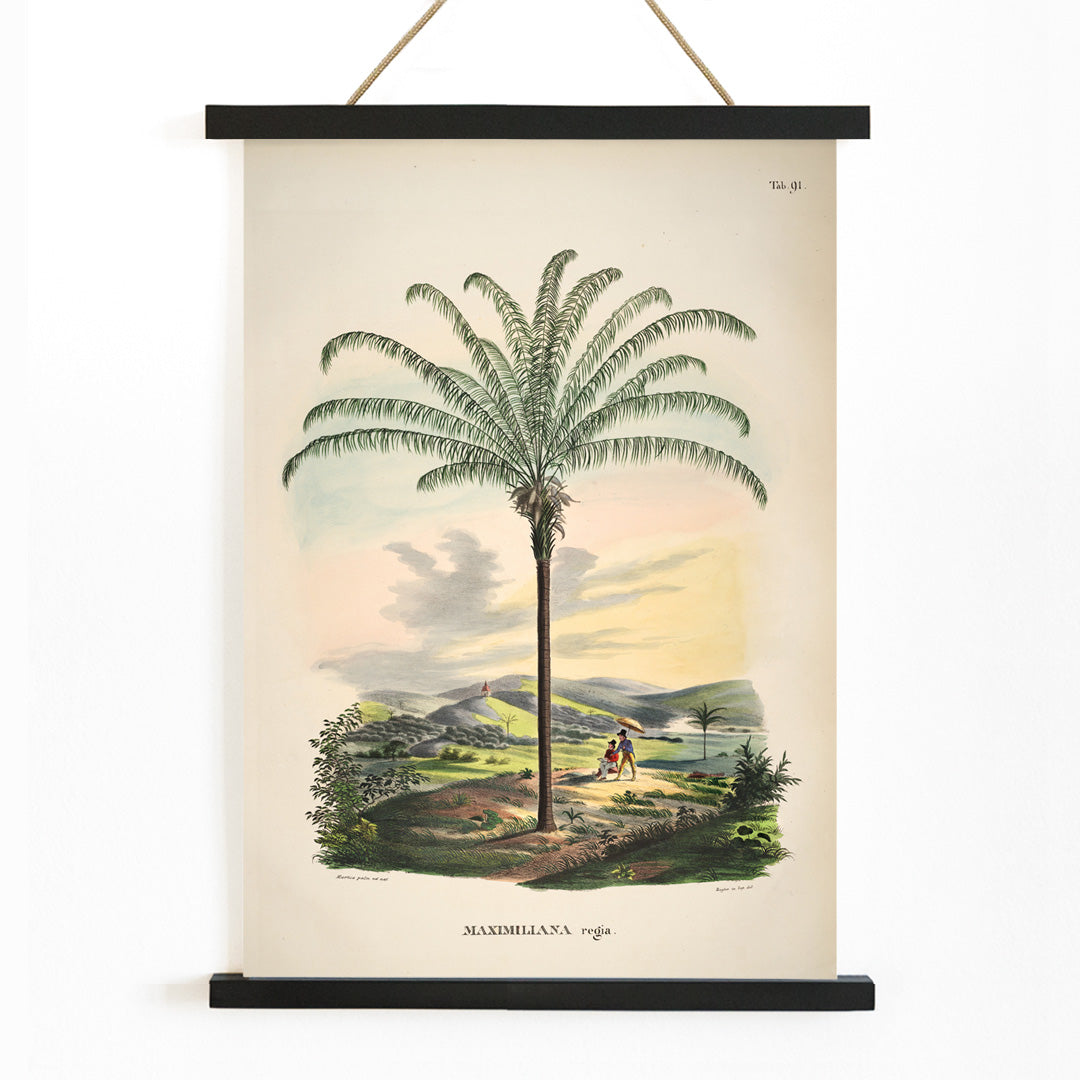
Maximiliana Regia reflects the period’s fascination with cataloging the world’s flora, as European scientists documented exotic plants through expeditions and illustrated atlases. This plate was created to aid identification and knowledge-sharing among botanists, physicians, and the scientifically curious, shaping perceptions of tropical landscapes from afar.
Such illustrations were essential references in the scientific community, turning living specimens into accessible knowledge. Today, they are appreciated for their historical significance and their role in the evolution of botanical art, fitting naturally alongside other scientific wall art.
Style & Characteristics
The composition features a central palm rendered with precise linework, surrounded by smaller botanical studies that highlight key features. The engraving is delicately hand-colored, with lush greens in the fronds, earthy browns in the trunk, and subtle yellow accents, all set against a warm beige background.
The overall effect is serene and methodical, balancing scientific clarity with decorative appeal. This vintage botanical print exemplifies the blend of documentation and artistry found in classic botanical art prints.
In Interior Design
This palm print introduces a refined, natural touch to interiors, ideal for spaces seeking a calm, cultivated atmosphere. It works beautifully in home offices, bedrooms, or hallways, and pairs well with natural materials like linen, rattan, and oak.
Its leafy palette complements green toned wall decor and warm neutrals, making it versatile for both traditional and modern minimalist settings.